
Configured per property
There is no fixed hierarchy to fit your building into. The tree is built to match how the hotel is actually metered.
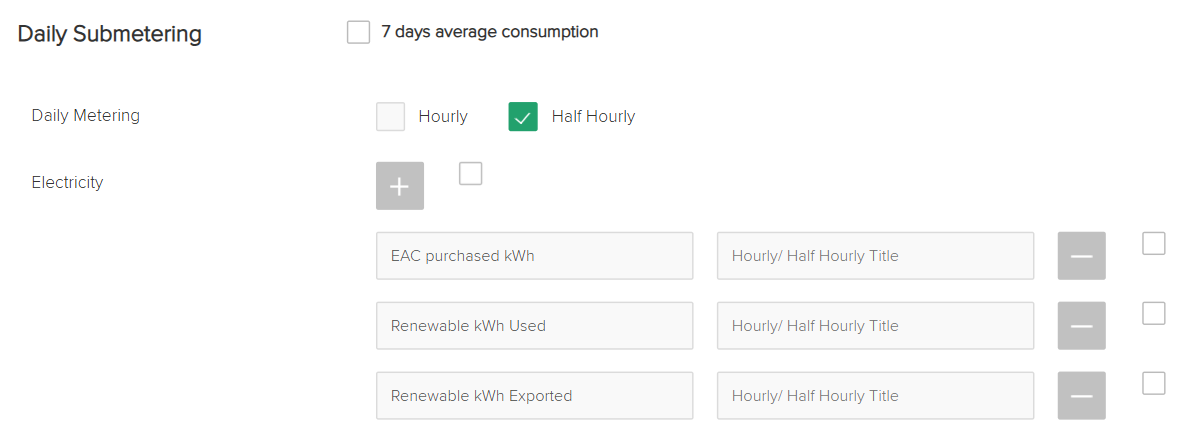
Down to the meter and the day.
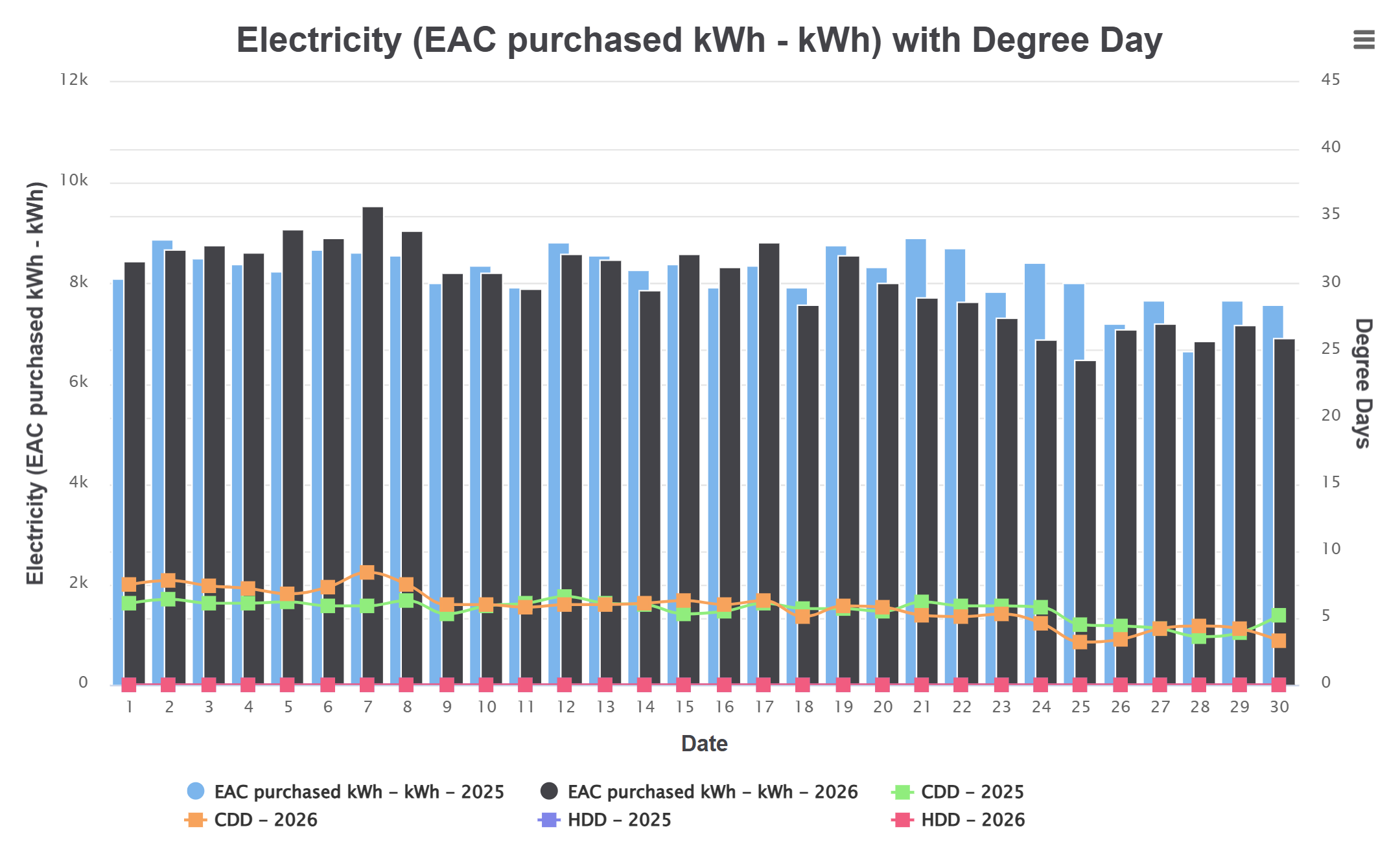
Granular analysis for an unlimited number of submeters on any utility, with comparative analysis of each meter against the same daily period of the previous year.
- Unlimited submeters per utility, per property.
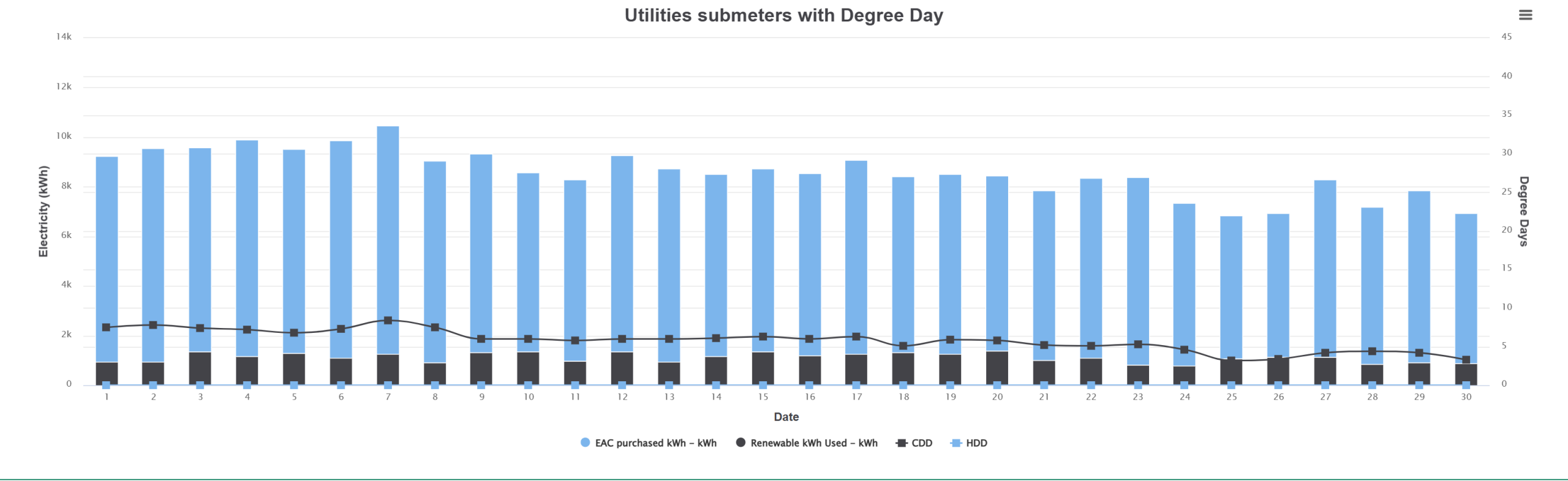
- Individual or stacked — read one meter, or combine several into a single trend.
- Climate and occupancy overlaid for both years, so the comparison is honest.
- Daily granularity, so a change is visible while the month is still running.
What only submetering shows.
A property-level total tells you consumption moved. It cannot tell you where. These are the patterns submetering makes visible.
Overnight base load
Plant running out of hours in back of house looks like nothing at property level and like an obvious flat line on a submeter.
Laundry and kitchen against covers
Consumption per cover or per room night, tracked against the actual operational driver rather than against the building as a whole.
Tenant recharging
Retail units, spas and leased outlets metered separately, so the recharge is based on measurement rather than an estimate.
About submetering
Can the submetering follow our own layout?
Yes. Submetering structures are configured per property — by system, by building, by department, or around specific high-consuming areas. Meters can be read individually or stacked to combine several into one trend.
Is there a limit on the number of submeters?
No. HEP supports an unlimited number of submeters for any utility, each comparable against the same daily period of the previous year with climate and occupancy overlaid for both years
Do we need to install new meters?
Not to start. HEP works with whatever submetering already exists. Where you want more granularity, the optional IoT module can bring in additional devices — energy, gas, water, sewage and air quality — via an IoT connector or standard Ethernet and GPRS interfaces.
See your own submeters in HEP.
Bring a property's submeter list and we will build the structure with you.
Request a demo